Software Development
10 UX Design Mistakes to Avoid for Your Digital Product

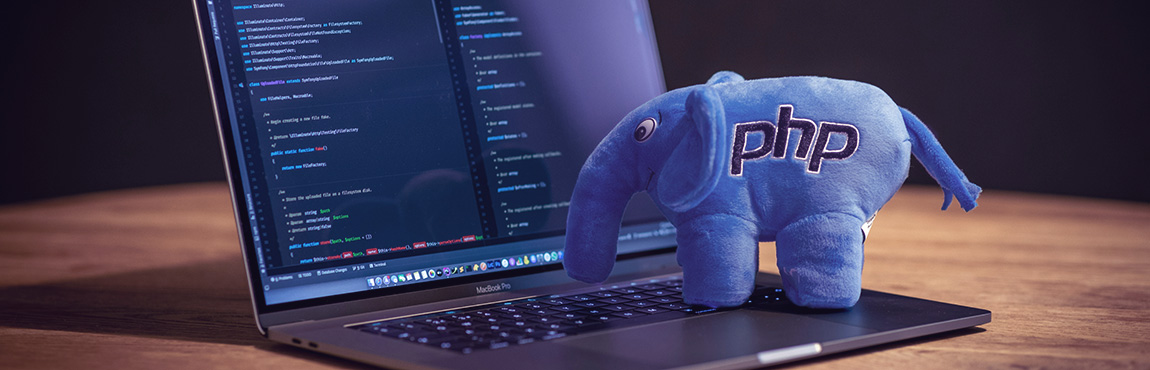
Are you working on a web project and hearing about different programming languages without knowing which one is right? Understanding what PHP is is essential, because this language powers a large portion of the web.
In this article, you'll learn about its role, its benefits and why it remains a relevant choice for many projects in 2026.
PHP is an open-source server-side scripting language. Practically, this means PHP code is processed on the web server before the page is sent to the user's browser. It is primarily used to create dynamic web pages, interact with databases and build complex web applications.
Unlike HTML or CSS, which structure and style content, PHP allows you to implement logic. It can display different content depending on the user, process forms, manage sessions and much more. It's the engine behind platforms like WordPress, Facebook and Wikipedia.
Despite the emergence of new languages, PHP retains a prominent position in the web development ecosystem thanks to solid, proven advantages.
Advantage | Description | Impact on the project |
|---|---|---|
Maturity and stability | Over 30 years of history, stable and well-tested releases | Reliability and predictability for long-term projects |
Large community | Vast developer community and abundant documentation | Easy-to-find support, quick problem resolution |
Affordable cost | Open-source, hosting widely available and inexpensive | Reduced infrastructure and development costs |
Flexibility | Compatible with most servers and databases | Great freedom of technological choice for the architecture |
For the manufacturing and industrial sector, PHP's stability and flexibility make it an excellent choice for developing in-house management systems or custom client portals.
In 2025, PHP remains a dominant force for several reasons. It is particularly relevant for projects that require a proven, cost-effective and fast-to-deploy solution. Content management systems (CMS) like WordPress today power more than 40% of all websites worldwide. Looking only at sites that use a CMS, WordPress represents about 60% of the market, making it by far the most widely used platform.
For enterprise applications, PHP's stability and security, combined with robust frameworks like Laravel or Symfony, offer a solid development environment. PHP's ability to integrate easily with enterprise databases such as Oracle or SQL Server, as well as its support for complex authentication protocols, makes it a viable option for critical internal systems.
Although languages like Node.js or Python are gaining popularity, PHP retains key advantages. Unlike languages that require specific application servers, PHP integrates natively with most standard web servers, which greatly simplifies deployment.
Its synchronous nature and request-based execution model make it easier to understand and debug for many traditional web applications. For example, for a content management application or a standard e-commerce site, the simplicity of PHP shared hosting is often a decisive advantage in terms of cost and ease of management compared with configuring a Node.js server.
PHP is a versatile language that can be used for a wide variety of web projects.
PHP's strength lies in its ability to handle server-side logic. It excels at tasks that require interaction between the user, the website and the database.
Here are some concrete examples of PHP use cases:
E-commerce sites: Managing products, orders and payments.
Content management systems (CMS): Building platforms like WordPress, Drupal or Joomla.
Social networks: Managing user profiles, posts and interactions.
RESTful APIs: Creating web services to power mobile apps or front-end applications.
Custom web applications: Developing solutions tailored to a company's specific needs.
So, what is PHP in 2026? It's a mature, stable and extremely versatile programming language that continues to be a pillar of the web. Its ease of learning, large community and affordable cost make it a strategic option for many projects. Good UX/UI design, combined with the power of PHP, enables exceptional user experiences.
However, be sure to evaluate a project's specific needs before choosing a language. It's often wise to compare technologies to ensure they align with your long-term goals.
To dive deeper into the technical aspects of the language, the official PHP documentation is a comprehensive and regularly updated reference.
PHP is a server-side scripting language used for web development. Yes, it remains extremely relevant and powers nearly 80% of the web, including major platforms like WordPress. Recent versions (PHP 8+) have significantly improved its performance, security and features, keeping it competitive and modern.
Like any language, the security of a PHP application depends on development best practices. The language itself is not inherently insecure. By using modern frameworks like Laravel or Symfony and following security recommendations (such as protection against SQL injection), you can build very robust and reliable applications.
The main difference is that PHP is a language designed specifically for server-side web development, while JavaScript is a versatile language that runs both on the client (in the browser) and on the server (with Node.js). PHP generates content on the server before sending it, whereas JavaScript can both manipulate pages interactively on the client and handle server-side logic depending on the runtime environment.
No, it's possible to write "native" PHP code without a framework. However, using a framework like Laravel or Symfony is strongly recommended for any professional project. They provide structure, security tools and reusable components that speed up development, improve code quality and make long-term maintenance easier.

We’d be more than happy to chat about your technology goals and always enjoy learning about new businesses along the way. Get in touch today!